Skip to content
Healthcare technology for the care sector

Digital solutions for healthcare organizations

From mental health to elderly care: the CareHub ecosystem helps healthcare organizations reduce administrative burdens, improve the client overview and structurally lower workload.

73%

of healthcare workers experience excessive workload

Source: AZW Employee Survey, 2023

40%

of working time is spent on average on administration

Source: Berenschot / NZa, 2023

10+

separate systems per healthcare organization

Source: Nictiz eHealth Monitor, 2023

Why do healthcare organizations struggle with digitalization?

Digital care for healthcare organizations is the process of integrating ICT systems and automating workflows to free up more time for direct client care. Healthcare organizations in the Netherlands are under enormous pressure. The workforce shortage in healthcare is growing due to an aging population, while the registration burden only continues to increase. Staff spend up to 40% of their working time on administration instead of direct client care.

Fragmented IT landscapes with 10 or more separate systems cause information to become scattered. Healthcare professionals lack a complete client overview, which puts the quality of appropriate care under pressure. Meanwhile, care offices and health insurers demand ever more accountability and transparency across the care chain.

The solution does not lie in even more systems, but in smart integration. The CareHub ecosystem connects existing healthcare software into a cohesive whole, making workload reduction in healthcare a reality and structurally reducing administrative burdens.

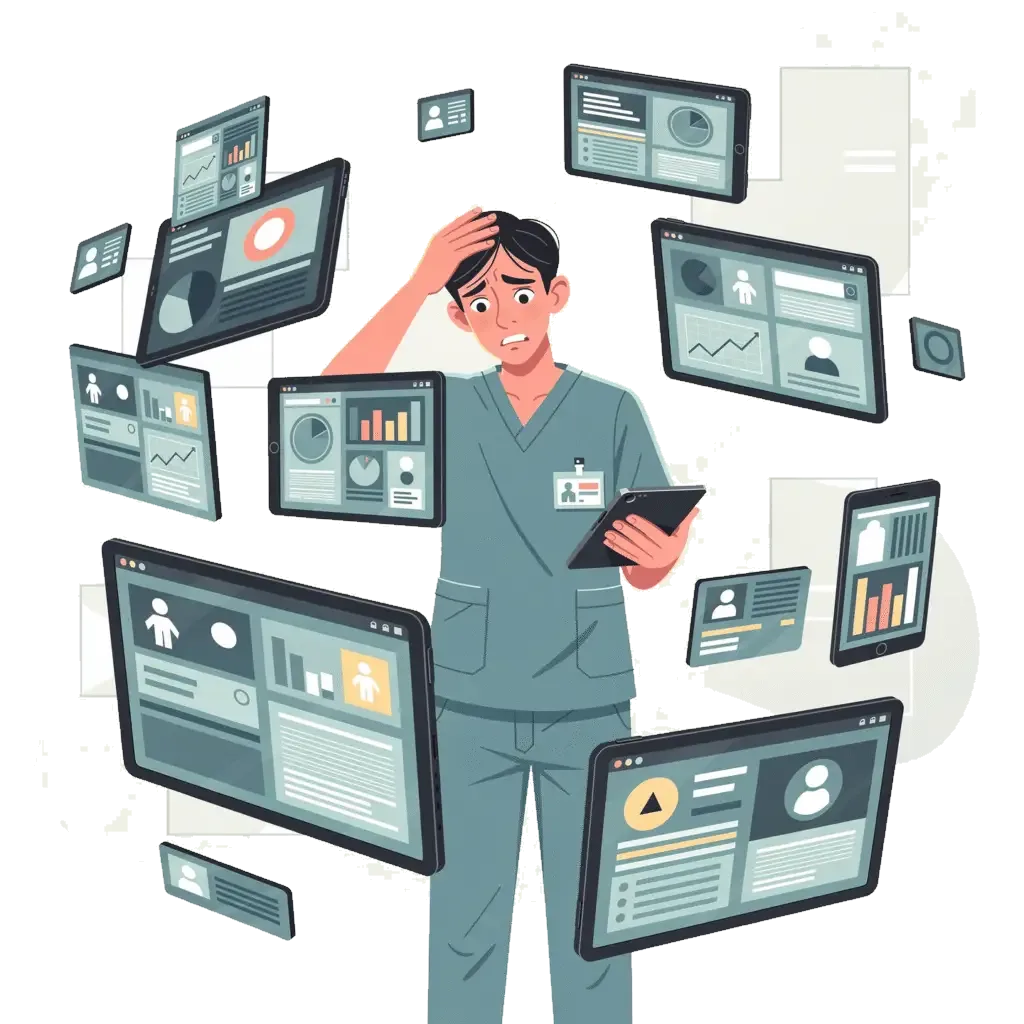
Healthcare worker overwhelmed by administrative burdens and multiple registration systems

What digital healthcare solutions are available per sector?

The CareHub ecosystem offers personalized care solutions tailored to the unique workflows and registration requirements of each healthcare sector. Discover what healthcare technology can do for your sector.

Mental health digitalization

Digital client journeys that strengthen the therapeutic relationship. From automated treatment plans and outcome measurements to smart scheduling integration that reduces no-shows by up to 30% (source: CareHub GGZ case study).

  • Digital client journeys and e-health modules
  • Automated treatment plans
  • Fewer no-shows through smart reminders

Digital youth care

Integrated care collaboration in youth services requires seamless information exchange between municipalities, families and care workers. The CareHub makes multidisciplinary consultations and family plans digitally accessible.

  • Digital chain collaboration and integrated care
  • Family plans in a shared portal
  • Facilitating multidisciplinary consultations

Elderly care digitalization

An aging population demands smart healthcare technology. Telemonitoring, automated medication management and informal caregiver portals ensure safe, connected elderly care while maintaining independence.

  • Remote telemonitoring
  • Automated medication management
  • Informal caregiver portals for engaged families

Long-term care technology (Wlz)

The Long-Term Care Act sets high standards for registration and accountability to care offices. Integrated care plans and billing automation make compliant operations straightforward.

  • Integrated care plans across the entire care chain
  • Billing automation for care offices
  • Wlz-compliant registration and reporting

Community nursing

Community nurses are frequently on the road. Mobile registration, smart route optimization and digital reporting mean more time at the bedside and less time behind the screen.

  • Mobile registration at the bedside
  • Route optimization for efficient scheduling
  • Digital reporting with speech recognition
Caregiver supporting elderly client with the help of digital healthcare technology

What results do healthcare organizations achieve with the CareHub?

Healthcare organizations that deploy the CareHub ecosystem experience measurable improvements in efficiency, client satisfaction and staff satisfaction. Through smart EHR integration and healthcare technology, teams work faster, better and with less frustration.

Aspect Without CareHub With CareHub
Admin time 40% of working hours Up to 60% reduction in documentation
Client overview Scattered across 10+ systems One integrated dashboard
System integration Manual data transfers Automated via FHIR/HL7
Vendor lock-in Dependent on single vendor Open standards, free choice
Compliance Managed per system separately NEN 7510 & GDPR ecosystem-wide
  • Up to 60% less administration

    Automated registration and smart workflows structurally reduce administrative burdens in healthcare, so staff have more time for direct client care.

  • Complete client overview

    All relevant information from the EHR, scheduling, treatment plans and communication in a clear dashboard. Personalized care starts with a complete client overview.

  • 24/7 digital accessibility

    Client portals and digital communication channels ensure continuous accessibility without additional pressure on healthcare staff. Appropriate care at the right moment.

  • Faster EHR integration

    Thanks to open standards such as FHIR and HL7, the CareHub integrates seamlessly with existing electronic health records. No vendor lock-in, but maximum interoperability across the care chain.

Frequently asked questions

Frequently asked questions about digital care

Want to know what the CareHub can do for your organization?

Whether you work in mental health, youth care, elderly care, long-term care or community nursing: we would be happy to show you how healthcare technology helps your organization lower workload and improve the quality of care. Schedule a no-obligation consultation or view our case studies.