Innovation
Staff shortages and an ageing population are putting healthcare under pressure. How workflow automation and digital tools can structurally reduce administrative burdens.
The Dutch healthcare sector is facing one of the greatest challenges in its history. The staff shortage is growing steadily: there are currently tens of thousands of vacancies in healthcare that remain structurally unfilled. Research by CBS and RIVM shows that 1 in 6 healthcare workers is seriously considering leaving the sector – not because of the work itself, but because of the workload and the circumstances surrounding it.
At the same time, care demand is increasing substantially. The ageing population means that the Netherlands will face a rise in care demand of 30 to 40 percent by 2030 (RIVM Public Health Foresight Study) in the coming years. More elderly people who wish to live at home longer, more chronic conditions and a more complex care need – it requires more hands at the bedside, while those hands are simply not available.
The consequences are visible throughout the entire chain. Burnout rates among nurses are considerably higher than the national average. In mental healthcare, waiting times extend to months, while clients urgently need help. Professionals feel they have too little time for the core of their profession: caring for people.
This is not a temporary problem. The combination of demographic shifts and a tight labour market makes it clear that healthcare requires structural solutions. Working harder is no longer an option – working smarter is a necessity.
Before we look at solutions, it is essential to understand where the time of healthcare professionals actually goes. Study after study confirms the same picture: on average, healthcare workers spend 40% of their working time on administration (source: Berenschot/KPMG, (Ont)Regel de Zorg). That is nearly half of every working day not spent on direct care delivery.
The same information must be entered into multiple systems because they do not communicate with each other. A nurse enters client data into the ECR, then again into the scheduling system and once more into the billing system. This not only costs time, but also increases the risk of errors.
Relevant client information is scattered across different systems and departments. Professionals spend valuable minutes looking up records, consulting colleagues and navigating through non-integrated applications.
Coordination between departments, referrers and chain partners still largely takes place via telephone and email. It takes multiple attempts to reach the right person, leading to delays in care delivery.
Despite digitalisation, many healthcare organisations still work with forms, faxes and manual workflows that could easily be digitised. Think of intake forms, consent declarations and reports that are still maintained on paper.
The result is a vicious cycle: high administrative burdens lead to more workload, which leads to more attrition, which leads to even higher workload for the remaining staff. To break this cycle, a fundamentally different approach is needed.
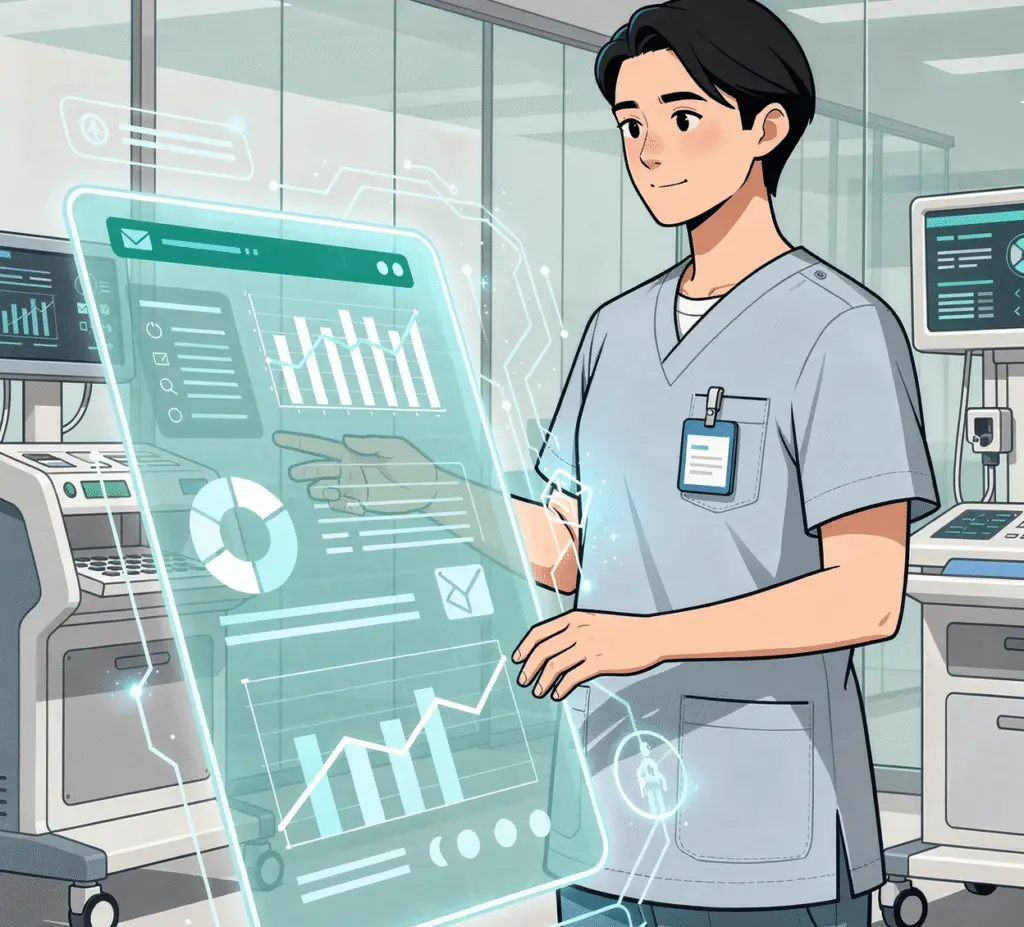
Let one thing be clear: technology is not there to replace people. The goal of workflow automation in healthcare is to free professionals from repetitive tasks, so they have more time for what truly matters – personal contact with clients and patients.
Concrete applications of workflow automation that have a direct impact on daily practice:
Referrals are automatically processed, classified and routed to the appropriate department or practitioner. This saves hours of manual processing per week and significantly reduces waiting times for clients.
Clients complete questionnaires at home via a secure portal. The responses automatically flow into the ECR, ensuring the professional already has the relevant information at the first consultation – without manual data entry.
Intelligent scheduling software takes into account availability, travel time, competencies and client preferences. This reduces the time team leaders spend on rostering and optimises the deployment of scarce staff.
When systems communicate seamlessly with each other, the need for duplicate data entry disappears. The CareHub ecosystem of PCD is specifically designed for this: an open platform in which complementary healthcare technologies work together via standardised connections.
These forms of automation are not a distant prospect. They are already being successfully deployed at healthcare organisations across the country today. The difference lies in the approach: not implementing one standalone system, but building an ecosystem in which everything works together.
In addition to workflow automation, there are specific digital tools that measurably reduce workload in healthcare. The power lies in the combination: when these tools are interconnected, they amplify each other’s effect.
Clients and informal carers gain access to a secure portal where they can view appointments, upload documents and send messages. This reduces the number of phone calls and gives clients greater control over their own care process.
Not every consultation requires an in-person visit. Video consultations enable hybrid care models where face-to-face contact is combined with digital check-ins. This saves travel time for professionals and is accessible for clients.
By analysing data intelligently, risks can be identified early. Think of recognising patterns that indicate a deterioration in health, enabling proactive intervention rather than reactive responses.
Reports for care offices, municipalities and internal quality metrics can largely be automated. This not only saves time, but also increases the accuracy and consistency of the data.
The results speak for themselves. In our portfolio cases, we see that an integrated approach to digital tools can lead to a reduction in administrative burdens of 60%. That is not a marginal improvement – it is a fundamental shift in how healthcare professionals spend their time.
With all the technological possibilities, one principle remains paramount: technology must strengthen the humanity in care, not replace it. The value of a listening ear, an encouraging look or a warm hand cannot be digitised – and it should not be.
What can and should be digitised are the processes that keep professionals away from that human contact. Every minute a nurse saves on administration is a minute she can spend with her clients. Every action a system can take over automatically is one less action that can lead to errors or frustration.
This is why it is crucial to choose technology that fits existing work processes. Solutions imposed top-down without support on the work floor are destined to fail. The best digital tools are those that healthcare professionals themselves experience as supportive.
PCD CareHub takes a clear approach in this regard: we invest in proven technologies that integrate seamlessly with the systems healthcare organisations already use. Through the CareHub ecosystem, we connect complementary solutions into one coherent whole – without the work floor having to undergo a complete system change.
40%
Time spent on administration
Source: Nictiz e-health Monitor, 2024
60%
Reduction achievable
Source: CareHub case studies
30-40%
More care demand by 2030
Source: RIVM Toekomstverkenning Zorg, 2024
The future of healthcare does not lie in the choice between people and technology. It lies in the combination: technology that brings out the best in people. Healthcare professionals who can once again do what they originally chose to do – care for others. That is the promise of smart digitalisation, and that is what PCD CareHub works towards every day.
Discover how the CareHub ecosystem can structurally relieve your healthcare organisation – so your professionals have time again for what truly matters.
Discover more perspectives on digital care, healthcare technology and the CareHub ecosystem.
Discover how workflow automation and the CareHub ecosystem can structurally reduce workload in your organisation. Get in touch for a no-obligation conversation.
Get in touch